I am pleased by the increased enthusiasm for declaring Dilla's Birthday a national holiday.
07 February 2009


18 January 2009

24 December 2008
Though she's still quite young, the great flamenco cantora La Macanita has for years performed villancicos around Jerez de la Frontera, Spain at Christmas. I'm not pulling an Eliot here, but this is worth checking out more than a few times. Her solo recounts the conversation between Jesus' parents and an innkeeper who demands money, and the chorus talks about their hard winter journey. This is a very cute video of one of her numbers from the 70's...
I hope to blog more next month and thereafter..
01 December 2008
Review: BBQ Tour
I had the occasion to drive back and forth through the Carolinas the last two weeks so I suppose I should chime in with my bbq rankings:
1. Brown’s BBQ, Kingstree, SC, a little under a half hour from 95 and north of town. Kingstree also boasts James Witherspoon’s plantation house which served as ‘an encampment for 100 British dragoons and a number of Tories,’ its name originating from an 18th Century search for the best lumber for British shipbuilding. I did not venture to Hemingway, SC, NE of Kingstree, which offers Big D’s and Kenny’s bbq and Home Boy Soul Food, but Southern Pee Dee River cuisine is unquestionably one of the high points of the East Coast, right smack in House Majority Whip Jim Clyburn’s congressional district where black roosters land by the roadside and not a mile goes by where you’re not reminded of Jesus’ love. Because eating in means that you can only get the buffet, don’t do as I did and eat Clyde Cooper’s at noon and pull in here to sample a sandwich at four. The $9 buffet features bbq pork, ribs, chicken cued, roasted and fried, meatloaf, offal, catfish stew (my favorite offering), delicious beef stew, Southern greens, sweet potatoes, etc. as well as classic pecan pie. The pork is a coarse chop rather than fine, but the sauce here is the best I’ve ever had and expect to ever have. Pee Dee sauce uses vinegar as the main ingredient in East NC fashion but uses mustard and tomato sauce in significant portions, and it seems that there was some sort of meat stock in ample evidence in Brown’s sauce. En route there was a small grocery store/ gas pump which had Pee Dee River Swamp Sauce as the only offering other than Kraft, exceptional and universally acclaimed upon my return, with a blend similar to Brown’s but without the presumed stock ergo not quite the same. I was looking for veggies at the small store to dine on after processing Brown’s but:
“Do you sell any produce?”
“No, there’s a place right up the road.”
“That way?”
“Yessir, just seven miles up the road.”
“I’m from NJ; seven miles is not right up the road.”
“I’m from DC, honey, and they told me this job was right up the street, but it’s thirty miles away from where I live. That was 10 years ago, and I’m still working here.”
2. Parker’s, Wilson, NC, right off 95 but a little tricky to find. All reports that Parker’s is not great are woefully misguided and it is with great difficulty that I don’t put them first. Snowbird motorists are well served to select a Wilson hotel from the NC Welcome Center coupon books, check in for layover and then fill an empty stomach here before venturing to the NC art museum in Raleigh first thing in the morning. I am one to believe that bbq should only serve bbq and do it well, but the decision to serve fried chicken here was made long ago to keep the groups of locals that meet here every night from going somewhere else for variety. Keeping the locals in volume away from the town’s other cue spots prompts them to offer a pork sandwich, a large side order, hush puppies, and a pitcher of water to the cash strapped for $3. A combo platter (my choice) where a juicy chicken breast is placed atop your pork goes for $7 and ‘all you can eat’ administered by accommodating waiters in white paper hats goes for $9. Great sweet tea which comes in pitchers, best Brunswick stew of the three examples on the trip, delectably moist hush puppies, mustard-based slaw and the best pork on the trip. East NC vinegar sauce on chopped pork is my favorite so this was quite an event for me.
3. Clyde Cooper’s, Raleigh, NC. The 70 year old lunch spot for people working in NC government with prices similar to Parker’s, the pork sandwich is wonderfully chopped with a layer of slaw that awaits your application of their pungent sauce. Also great hush puppies, good Brunswick stew, collards, tea, every seat taken, in a stollable downtown with street parking and free museums.
4. The GA Pig, Brunswick, GA. This was started 20 years ago as a stop on 95 (exit 29, Jekyll Island) that locals would drive to, so it doesn’t have the historical authenticity and geezer prices of the previous three but every detail has been attended to to give the atmosphere and food appeal to purists, especially the smell of the dining room with its long tables and rustic decor. It’s Brunswick, so the stew seems authentic, lightly seasoned to accent the taste of the ingredients. A heavy ketchupy sauce, tho, accompanies the enticingly fatty cuts of pork that await the hungry sojourner who must plan on healthier fare later.
5. Maurice’s Piggy Park, Columbia, SC. Local chain that basks in the glory of mustard sauce beneath the Confederate flag. The sauce is really good for turnup greens which are not for sale here, but spicy green beans are available.
Other highlights:
1. O’Steen’s, St. Augustine, FL. The place had a long line outside as it often has so I took out a bowl of the Minorcan clam chowder with the locally grown dalil peppers. A real treat for any fan of Manhattan CC and worth a stop off 95 along with a trip to the art galleries near the winery, specifically Energy Lab with canvases by its founder Carlos Paredes and its next door neighbor, the Butterfield Garage which features Maribel Angel paintings.
2. Tony’s and Sons, Kingston, PA. Okay, why is this included and why am I there? I’m including a three day trip upstate to Ithaca and east of there the weekend before going south that Tuesday. Omelettes and hot sandwiches. The exterior is dilapidated deco with no references to sons, so I was unsure I was at the right place, but upon crossing the threshold to encounter inside the owner holding fort at the counter wearing his engineer’s cap in the three colors of Italy, I knew I was in the right place. I don’t get into political arguments frequently offline and wasn’t seeking out research on the pockets of the Giuliani electoral base in the post-anthracite NE PA urban centers, but after watching the BBC report on racial attitudes in this area, Tony’s is a hornet’s nest for people who want to go right to the story. Everywhere pasted on the walls are expressions of dissatisfaction with the Obama victory amid homophobic jokes about the Hon. Barney Frank and other musings. I overheard “there’s suddenly a lot of stolen cars turning up at the White House.” It makes you appreciate Ithaca once you get there. Many of the omelettes are named after people, including at least two doctors who may have performed successful operations on Tony. I was querying about ingredients of said omelettes and after some reluctant responses, Tony found his discursive form:
“Look, you don’t need to know the ingredients. Everything here’s good. Who is this guy, coming in here and asking me the ingredients?! He’s not from around here. You don’t know nothing, but you just walked in on the best Italian food anywhere! Order any omelette, it doesn’t mattah! As long as you don’t got no allergies.”
I opted for the Soprano’s omelette with an Italian hoagie to go, reportedly their only cold sandwich, which came on a fresh roll. The omelette was the best I ever had, incorporating tomato sauce and local sausage with a garlic doused toast. You can spend a month ordering omelettes in Lyon and not have it this good. I’m not saying Act Up shouldn’t pay Tony a visit, but I will go back for more omelettes during which I kowtow to Tony, ignore his political pronouncements and invoke the privileges of being a white guy with a deep voice.
Update: 2. (tie) Aloy's, Poughkeepsie, NY. Can't believe I forgot about this from that weekend. Pizza that evokes comparison to De Lorenzo's in Trenton and Mario's in the Bronx served by friendly staff with accents from the Abruzzo region. I'll make it a tie for second so that I don't have to change the numbers. Unfortunately the German Expressionism show is down at Vassar, but there's some Julie Mehretus up if you can't make it to NC and a Tintoretto. They also have a plaster model of Ghiberti's Gates of Paradise doors of the Baptistry, hidden in the stairway above the bathrooms, if you want to save yourself a trip to Florence.
 3. Pasha Middle Eastern Foods, Daytona Beach, FL. Not to be confused with the chain further south. Good ethnic food is much in evidence on International Speedway Drive along with, without exaggeration, some of the best used book stores on the East Coast: Mandala on the Speedway Dr and Abraxas around the corner on Beach St. Mandala has a poetry section featuring New Directions offerings of the 70s and 80s which are out of print and half priced, which isn’t of course quite as good as it was when I walked in, and a large and well selected fiction and philosophy section to go with a radical section second only in my travels to Village Books in Tivoli, NY. The two stores have the best and second best selections of Kierkegaard I’ve ever seen used. I didn’t get whether the Pasha family was Armenian, Turkish, or whatever but I had the gooey Armenian cheese pita and the quality of the food could be passed off at a much higher price... Grocery items are pricey as I suppose its where you have to go for that in Daytona.
4. Mexican place in a small white building, South of Ocala, FL. I certainly should do a better job of noting the name and location of this eatery, but I note the fact that there are a lot of good Mexican places and promising bbq that I sort of wish I had saved room for in this area, which I traversed between Blue Springs National Park and the Margorie Rawlings home at Cross Creek via the national forest. Blue Springs Park is a must in the wintertime because the manatees congregate there for the hot water, which means you get to meet dozens upon dozens of these friendly creatures whose shyness is overcome by the need to come up and breathe oxygen. I think they were elephants who decided to swim away from predators when the continents were closer together.

There should be some attachment to a motorboat to keep them away from the propellor, their main foe here and now, but due to conservation efforts their numbers seem to be increasing slightly in recent years. Also there seem to be many more armadillos, which I like because they also look ancient. The Mexican place made me feel like I was in Mexico on account of kitsch nativity sets on sale and general disorganization, and a 14 year old son of the owner took me around and gave me his life story, apologizing for the fact that the meat shipment had not arrived yet, prompting me to ask for whatever the pretty cook was frying which turned out to be 5 delicious ham and corn empenadas for $4. The boy’s dad was from El Salvador so he opened a jar of Salvadoran slaw for me which was included with the sour cream and a gravy-like salsa picante.
5. Shangri-La at Mountain Gate, Oliverea, NY. If you drive all the way out here for Indian food you will get mountain scenery. There no light or sign at McKinley Hollow Road, so it’s the turnoff south of the better lit resorts on the main roads. I don’t know how much business they do in the winter but they gave us a space heater because the dining room hadn’t been heated.
6. Louis’s Lunch, Ithaca, NY. This is where French bread pizza got its start. The actual original is the Hot Truck which opens around 9pm NW of campus but this is north of campus and open during the day. I can report that French bread pizza is better when it isn’t frozen and there are two sides to the roll.
7. Tony’s Pizza, Crescent Beach, FL. I had been there a long time ago and was struck not by the food but how the pretense to being an Italian place was set aside in order to decorate the walls with framed excerpts from the Koran which promise eternal damnation for the uncharitable adjacent to a TV screen showing the really bad WB sitcom spinoffs. At this visit I confirmed that “Tony” was actually a Palestinian from East Jerusalem, and this time the TV featured closed-captioned Jerry Springer which could be seem in the background with a framed overhead photo of Mecca in the foreground.
1. Brown’s BBQ, Kingstree, SC, a little under a half hour from 95 and north of town. Kingstree also boasts James Witherspoon’s plantation house which served as ‘an encampment for 100 British dragoons and a number of Tories,’ its name originating from an 18th Century search for the best lumber for British shipbuilding. I did not venture to Hemingway, SC, NE of Kingstree, which offers Big D’s and Kenny’s bbq and Home Boy Soul Food, but Southern Pee Dee River cuisine is unquestionably one of the high points of the East Coast, right smack in House Majority Whip Jim Clyburn’s congressional district where black roosters land by the roadside and not a mile goes by where you’re not reminded of Jesus’ love. Because eating in means that you can only get the buffet, don’t do as I did and eat Clyde Cooper’s at noon and pull in here to sample a sandwich at four. The $9 buffet features bbq pork, ribs, chicken cued, roasted and fried, meatloaf, offal, catfish stew (my favorite offering), delicious beef stew, Southern greens, sweet potatoes, etc. as well as classic pecan pie. The pork is a coarse chop rather than fine, but the sauce here is the best I’ve ever had and expect to ever have. Pee Dee sauce uses vinegar as the main ingredient in East NC fashion but uses mustard and tomato sauce in significant portions, and it seems that there was some sort of meat stock in ample evidence in Brown’s sauce. En route there was a small grocery store/ gas pump which had Pee Dee River Swamp Sauce as the only offering other than Kraft, exceptional and universally acclaimed upon my return, with a blend similar to Brown’s but without the presumed stock ergo not quite the same. I was looking for veggies at the small store to dine on after processing Brown’s but:
“Do you sell any produce?”
“No, there’s a place right up the road.”
“That way?”
“Yessir, just seven miles up the road.”
“I’m from NJ; seven miles is not right up the road.”
“I’m from DC, honey, and they told me this job was right up the street, but it’s thirty miles away from where I live. That was 10 years ago, and I’m still working here.”
2. Parker’s, Wilson, NC, right off 95 but a little tricky to find. All reports that Parker’s is not great are woefully misguided and it is with great difficulty that I don’t put them first. Snowbird motorists are well served to select a Wilson hotel from the NC Welcome Center coupon books, check in for layover and then fill an empty stomach here before venturing to the NC art museum in Raleigh first thing in the morning. I am one to believe that bbq should only serve bbq and do it well, but the decision to serve fried chicken here was made long ago to keep the groups of locals that meet here every night from going somewhere else for variety. Keeping the locals in volume away from the town’s other cue spots prompts them to offer a pork sandwich, a large side order, hush puppies, and a pitcher of water to the cash strapped for $3. A combo platter (my choice) where a juicy chicken breast is placed atop your pork goes for $7 and ‘all you can eat’ administered by accommodating waiters in white paper hats goes for $9. Great sweet tea which comes in pitchers, best Brunswick stew of the three examples on the trip, delectably moist hush puppies, mustard-based slaw and the best pork on the trip. East NC vinegar sauce on chopped pork is my favorite so this was quite an event for me.
3. Clyde Cooper’s, Raleigh, NC. The 70 year old lunch spot for people working in NC government with prices similar to Parker’s, the pork sandwich is wonderfully chopped with a layer of slaw that awaits your application of their pungent sauce. Also great hush puppies, good Brunswick stew, collards, tea, every seat taken, in a stollable downtown with street parking and free museums.
4. The GA Pig, Brunswick, GA. This was started 20 years ago as a stop on 95 (exit 29, Jekyll Island) that locals would drive to, so it doesn’t have the historical authenticity and geezer prices of the previous three but every detail has been attended to to give the atmosphere and food appeal to purists, especially the smell of the dining room with its long tables and rustic decor. It’s Brunswick, so the stew seems authentic, lightly seasoned to accent the taste of the ingredients. A heavy ketchupy sauce, tho, accompanies the enticingly fatty cuts of pork that await the hungry sojourner who must plan on healthier fare later.
5. Maurice’s Piggy Park, Columbia, SC. Local chain that basks in the glory of mustard sauce beneath the Confederate flag. The sauce is really good for turnup greens which are not for sale here, but spicy green beans are available.
Other highlights:
1. O’Steen’s, St. Augustine, FL. The place had a long line outside as it often has so I took out a bowl of the Minorcan clam chowder with the locally grown dalil peppers. A real treat for any fan of Manhattan CC and worth a stop off 95 along with a trip to the art galleries near the winery, specifically Energy Lab with canvases by its founder Carlos Paredes and its next door neighbor, the Butterfield Garage which features Maribel Angel paintings.
2. Tony’s and Sons, Kingston, PA. Okay, why is this included and why am I there? I’m including a three day trip upstate to Ithaca and east of there the weekend before going south that Tuesday. Omelettes and hot sandwiches. The exterior is dilapidated deco with no references to sons, so I was unsure I was at the right place, but upon crossing the threshold to encounter inside the owner holding fort at the counter wearing his engineer’s cap in the three colors of Italy, I knew I was in the right place. I don’t get into political arguments frequently offline and wasn’t seeking out research on the pockets of the Giuliani electoral base in the post-anthracite NE PA urban centers, but after watching the BBC report on racial attitudes in this area, Tony’s is a hornet’s nest for people who want to go right to the story. Everywhere pasted on the walls are expressions of dissatisfaction with the Obama victory amid homophobic jokes about the Hon. Barney Frank and other musings. I overheard “there’s suddenly a lot of stolen cars turning up at the White House.” It makes you appreciate Ithaca once you get there. Many of the omelettes are named after people, including at least two doctors who may have performed successful operations on Tony. I was querying about ingredients of said omelettes and after some reluctant responses, Tony found his discursive form:
“Look, you don’t need to know the ingredients. Everything here’s good. Who is this guy, coming in here and asking me the ingredients?! He’s not from around here. You don’t know nothing, but you just walked in on the best Italian food anywhere! Order any omelette, it doesn’t mattah! As long as you don’t got no allergies.”
I opted for the Soprano’s omelette with an Italian hoagie to go, reportedly their only cold sandwich, which came on a fresh roll. The omelette was the best I ever had, incorporating tomato sauce and local sausage with a garlic doused toast. You can spend a month ordering omelettes in Lyon and not have it this good. I’m not saying Act Up shouldn’t pay Tony a visit, but I will go back for more omelettes during which I kowtow to Tony, ignore his political pronouncements and invoke the privileges of being a white guy with a deep voice.
Update: 2. (tie) Aloy's, Poughkeepsie, NY. Can't believe I forgot about this from that weekend. Pizza that evokes comparison to De Lorenzo's in Trenton and Mario's in the Bronx served by friendly staff with accents from the Abruzzo region. I'll make it a tie for second so that I don't have to change the numbers. Unfortunately the German Expressionism show is down at Vassar, but there's some Julie Mehretus up if you can't make it to NC and a Tintoretto. They also have a plaster model of Ghiberti's Gates of Paradise doors of the Baptistry, hidden in the stairway above the bathrooms, if you want to save yourself a trip to Florence.
3. Pasha Middle Eastern Foods, Daytona Beach, FL. Not to be confused with the chain further south. Good ethnic food is much in evidence on International Speedway Drive along with, without exaggeration, some of the best used book stores on the East Coast: Mandala on the Speedway Dr and Abraxas around the corner on Beach St. Mandala has a poetry section featuring New Directions offerings of the 70s and 80s which are out of print and half priced, which isn’t of course quite as good as it was when I walked in, and a large and well selected fiction and philosophy section to go with a radical section second only in my travels to Village Books in Tivoli, NY. The two stores have the best and second best selections of Kierkegaard I’ve ever seen used. I didn’t get whether the Pasha family was Armenian, Turkish, or whatever but I had the gooey Armenian cheese pita and the quality of the food could be passed off at a much higher price... Grocery items are pricey as I suppose its where you have to go for that in Daytona.4. Mexican place in a small white building, South of Ocala, FL. I certainly should do a better job of noting the name and location of this eatery, but I note the fact that there are a lot of good Mexican places and promising bbq that I sort of wish I had saved room for in this area, which I traversed between Blue Springs National Park and the Margorie Rawlings home at Cross Creek via the national forest. Blue Springs Park is a must in the wintertime because the manatees congregate there for the hot water, which means you get to meet dozens upon dozens of these friendly creatures whose shyness is overcome by the need to come up and breathe oxygen. I think they were elephants who decided to swim away from predators when the continents were closer together.
There should be some attachment to a motorboat to keep them away from the propellor, their main foe here and now, but due to conservation efforts their numbers seem to be increasing slightly in recent years. Also there seem to be many more armadillos, which I like because they also look ancient. The Mexican place made me feel like I was in Mexico on account of kitsch nativity sets on sale and general disorganization, and a 14 year old son of the owner took me around and gave me his life story, apologizing for the fact that the meat shipment had not arrived yet, prompting me to ask for whatever the pretty cook was frying which turned out to be 5 delicious ham and corn empenadas for $4. The boy’s dad was from El Salvador so he opened a jar of Salvadoran slaw for me which was included with the sour cream and a gravy-like salsa picante.
5. Shangri-La at Mountain Gate, Oliverea, NY. If you drive all the way out here for Indian food you will get mountain scenery. There no light or sign at McKinley Hollow Road, so it’s the turnoff south of the better lit resorts on the main roads. I don’t know how much business they do in the winter but they gave us a space heater because the dining room hadn’t been heated.
6. Louis’s Lunch, Ithaca, NY. This is where French bread pizza got its start. The actual original is the Hot Truck which opens around 9pm NW of campus but this is north of campus and open during the day. I can report that French bread pizza is better when it isn’t frozen and there are two sides to the roll.
7. Tony’s Pizza, Crescent Beach, FL. I had been there a long time ago and was struck not by the food but how the pretense to being an Italian place was set aside in order to decorate the walls with framed excerpts from the Koran which promise eternal damnation for the uncharitable adjacent to a TV screen showing the really bad WB sitcom spinoffs. At this visit I confirmed that “Tony” was actually a Palestinian from East Jerusalem, and this time the TV featured closed-captioned Jerry Springer which could be seem in the background with a framed overhead photo of Mecca in the foreground.
30 November 2008

22 November 2008

The first two were clear, but today’s gained an Arthur Dove quality from its clouds, especially before the sun broke the horizon when there were just a few strips of grey carrying a little orange on their backs. As the sun ascends it sends rays out from behind the clouds as if scrolls are going to come down with laws and judgements.
20 November 2008
I have not beheld a sunrise for a considerable amount of time, perhaps to be counted in years. I’m inclined not to characterize this as an incompleteness, treating this, too, to the phrasing of consumerism, but to note how something this fundamental can be placed behind. The wait has given this morning a force. Like Indian music structures itself around the unity of the universe and time, the ritual of light, life and cycle, memory joins me to my own life and through sight to the notation of eternity as it is taken down in our quarter in the universe. The sun is heard as it affects.
16 November 2008
10 November 2008
There's a lot of paintings up in the galleries this fall, which is a good thing. How can it not be? I like paintings. Paintings are really what I go there for. Video exhibitions should be confined to works with imagination and artistry. I like video, but I usually come away thinking that people in Williamsburg have cameras but aren't sure what to do with them. Large, post-industrial spaces lend themselves initially to single-concept sculpture series or installation works, because hanging paintings means filling up a lot of wall space which is viewed as daunting. So I note that the large space occupied by Gagosian on 24th Street which has housed large Serras and Mike Kelly high school catharsis carnivals is now showing its second straight painting exhibition, and I'm not afraid of progress, progress that returns to that old, obvious form.
I've only really been in Chelsea for 45 minutes for the past month, which enabled me to see the new Lari Pittman show and peek in on a few other things. The Pittman show (recommended) is up for the rest of the month.
I became interested in Pittman's work in the mid-90s upon seeing one of the Decorated Chronology of Insistence and Resignation series, taken in by the endlessly possible critiques of culture and form within the post-Arshile Gorky depth of the canvas.

Credit card symbols, are, first of all, two-dimensional, so they frame the other methods of foregrounding, and represent an inclusive entrapment, as when Ashbery notes that everyone is invited to the showboat to gamble. Pittman notes there is no culture in LA that precedes consumerist culture, and the canvases serve as depictions of commodity culture while simultaneously existing as objects within that culture. Beyond the object, though, there is life, the life of the canvas and art and the references to heart, body and soul. Debt is the postmodern medium of exchange between cultures, artistic debt being no less illusory as economic and political debt.


Pittman displays a proper appreciation for Picabia's own perspective on perspective, use of text, and his figurative strategies, an appreciation that is most recognizable with his early work but is continually developed on, transported from the masculine in somber wartime Europe to gay Day-glo culture in Los Angeles (shown: Pittman, This Wholesomeness, Beloved and Despised, Continues Regardless; Picabia, La Nuit Espagnole). If Pittman's early use of Victorian silhouettes relate to Picabia's figures, both images have the effect of removing the picture from time and space, grasping at an eternal erotic image.

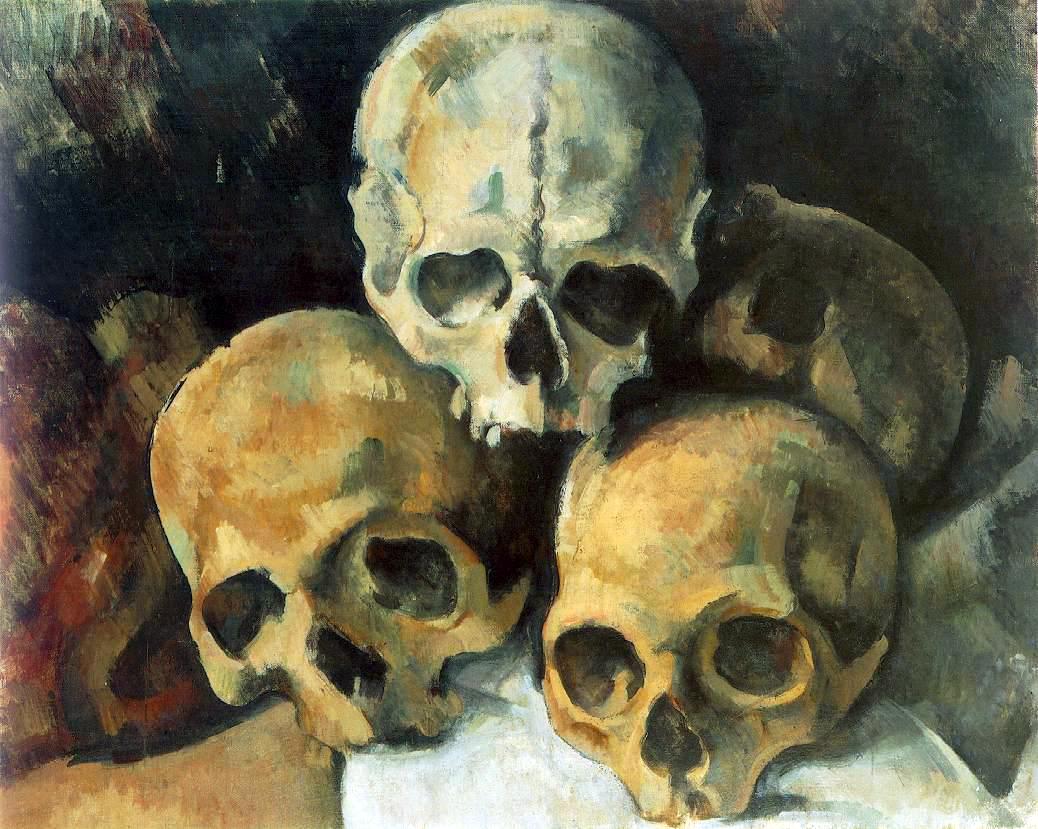
Pittman's new show returns to eternal themes by way of referencing the Flemish vanitas painting of the 16th and 17th Centuries, which influenced Cezanne and Picasso (pictured: Vanitas by Juriaen van Streeck, 1632). That late Reformation-era genre's biblical grouping of art with vanity and death responded to the Catholic, Southern European baroque style of the Counter-Reformation, and perhaps Pittman is consciously reconciling his Protestant blood with his more talked about Colombian heritage, but he is clearly subjecting the gloomy sepias of Dutch interiors to his florescent Southern California palette.
 Whatever the inspiration, Pittman isn't reproducing the objects of the vanitas tradition so much he is internalizing the representative strategies and playing with the still life juxtapositioning. The empty glass, for instance, remains for its utility as a convex mirror generator, but the skulls and scrolls are set aside for fried eggs, bunnies, and mice with butterfly wings for ears.
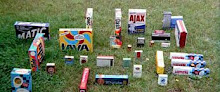
The utilization of the day-glo palette for cultural critique calls to mind the recent Sue Williams show at Zwirner. I am not inclined to report on shows that have ended, but the series is a variation on a theme and I can just put a picture on my blog,

which consists of day-glo abstraction with some body parts suggested in the Bacon/Matta vein, titled "Project for an American Century," a direct reference to the thinktank group that planned the Iraq War before the attacks of 9-11. My interpretation, which doesn't take much speculative daring, is that the works are suggestive of the Disneyfication of both cultural awareness where the lightness of pop culture obscures the death of over a million and the international promotion of this culture through pop music- bubble gum sensibilities. It was interesting to see the two shows in sequence, though I wish I had seen Pittman's first in a way because of Williams' direct appeal to the viewer. Pittman is all over the place and exists to be seen in its many permutations, which gives you more to do if you truck out there.
As I said, I didn't stray far from Zwirner and the 24st Street row in the time I had but I checked out some of the 23rd Street presentations amongst the pricey apartment lobbies, which included Nathan Redwood at Carin Golden that evoked Thomas Hart Benton on BC weed (in the sense that they're landscapes that aren't landscapes) with Guston-Crumb cartoon methods, and the easy on the eye artistry and art history references in the oils and bronzes of the straighoutta Yale MFA Havard Homstvedt at Perry Rubenstein.
I've only really been in Chelsea for 45 minutes for the past month, which enabled me to see the new Lari Pittman show and peek in on a few other things. The Pittman show (recommended) is up for the rest of the month.
I became interested in Pittman's work in the mid-90s upon seeing one of the Decorated Chronology of Insistence and Resignation series, taken in by the endlessly possible critiques of culture and form within the post-Arshile Gorky depth of the canvas.

Credit card symbols, are, first of all, two-dimensional, so they frame the other methods of foregrounding, and represent an inclusive entrapment, as when Ashbery notes that everyone is invited to the showboat to gamble. Pittman notes there is no culture in LA that precedes consumerist culture, and the canvases serve as depictions of commodity culture while simultaneously existing as objects within that culture. Beyond the object, though, there is life, the life of the canvas and art and the references to heart, body and soul. Debt is the postmodern medium of exchange between cultures, artistic debt being no less illusory as economic and political debt.
Pittman displays a proper appreciation for Picabia's own perspective on perspective, use of text, and his figurative strategies, an appreciation that is most recognizable with his early work but is continually developed on, transported from the masculine in somber wartime Europe to gay Day-glo culture in Los Angeles (shown: Pittman, This Wholesomeness, Beloved and Despised, Continues Regardless; Picabia, La Nuit Espagnole). If Pittman's early use of Victorian silhouettes relate to Picabia's figures, both images have the effect of removing the picture from time and space, grasping at an eternal erotic image.
Pittman's new show returns to eternal themes by way of referencing the Flemish vanitas painting of the 16th and 17th Centuries, which influenced Cezanne and Picasso (pictured: Vanitas by Juriaen van Streeck, 1632). That late Reformation-era genre's biblical grouping of art with vanity and death responded to the Catholic, Southern European baroque style of the Counter-Reformation, and perhaps Pittman is consciously reconciling his Protestant blood with his more talked about Colombian heritage, but he is clearly subjecting the gloomy sepias of Dutch interiors to his florescent Southern California palette.
 Whatever the inspiration, Pittman isn't reproducing the objects of the vanitas tradition so much he is internalizing the representative strategies and playing with the still life juxtapositioning. The empty glass, for instance, remains for its utility as a convex mirror generator, but the skulls and scrolls are set aside for fried eggs, bunnies, and mice with butterfly wings for ears.
The utilization of the day-glo palette for cultural critique calls to mind the recent Sue Williams show at Zwirner. I am not inclined to report on shows that have ended, but the series is a variation on a theme and I can just put a picture on my blog,
which consists of day-glo abstraction with some body parts suggested in the Bacon/Matta vein, titled "Project for an American Century," a direct reference to the thinktank group that planned the Iraq War before the attacks of 9-11. My interpretation, which doesn't take much speculative daring, is that the works are suggestive of the Disneyfication of both cultural awareness where the lightness of pop culture obscures the death of over a million and the international promotion of this culture through pop music- bubble gum sensibilities. It was interesting to see the two shows in sequence, though I wish I had seen Pittman's first in a way because of Williams' direct appeal to the viewer. Pittman is all over the place and exists to be seen in its many permutations, which gives you more to do if you truck out there.
As I said, I didn't stray far from Zwirner and the 24st Street row in the time I had but I checked out some of the 23rd Street presentations amongst the pricey apartment lobbies, which included Nathan Redwood at Carin Golden that evoked Thomas Hart Benton on BC weed (in the sense that they're landscapes that aren't landscapes) with Guston-Crumb cartoon methods, and the easy on the eye artistry and art history references in the oils and bronzes of the straighoutta Yale MFA Havard Homstvedt at Perry Rubenstein.
05 November 2008
The country had one choice amongst the major candidates that opposed the Iraq War, and that choice won despite relative inexperience, but his first choices have been pro-war: Biden and Emanuel. I recall him promising he would change the 'culture of Washington' that led to that war. At least Obama reiterated his critique of the war up to the general election date and, most importantly, won instead of McCain, Rudy and Hillary.
The United Nations should monitor Alaska elections. Lisa Murkowski outperformed polling expectations in 2004 and now Ted Stevens, coming off the felony conviction, has substantially outperformed post-conviction polls which had Begich up by margins of 8 (Rasmussen), 22, 2 and 6 in the days before yesterday. Alaska uses Diebold optical scan machines, which have been proven to be susceptible to voter fraud.
The Democratic Senate pickups, as well as the Presidency, have been by large margins and the Republicans have generally won the close Senate races of the past decade. What's comforting is that the margins put up in GA (Diebold), AK, and MN (ES&S) are not 51% or more which is what you would shoot for if you were rigging the election. Bev Harris documented in her book something I noticed at the time, that Chambliss' 1994 margin for victory over incumbent Max Cleland defied all polling, and she noted other irregularities in Georgia voting that year.
The United Nations should monitor Alaska elections. Lisa Murkowski outperformed polling expectations in 2004 and now Ted Stevens, coming off the felony conviction, has substantially outperformed post-conviction polls which had Begich up by margins of 8 (Rasmussen), 22, 2 and 6 in the days before yesterday. Alaska uses Diebold optical scan machines, which have been proven to be susceptible to voter fraud.
The Democratic Senate pickups, as well as the Presidency, have been by large margins and the Republicans have generally won the close Senate races of the past decade. What's comforting is that the margins put up in GA (Diebold), AK, and MN (ES&S) are not 51% or more which is what you would shoot for if you were rigging the election. Bev Harris documented in her book something I noticed at the time, that Chambliss' 1994 margin for victory over incumbent Max Cleland defied all polling, and she noted other irregularities in Georgia voting that year.
30 October 2008
During a 27-year championship drought you forget how to experience this. I don't believe it happened. I am accustomed to feeling a combination of hope, frustration, remorse, and bitterness at this time of year, following a Fall Classic with two other teams involved, followed by a Spring of the Philly symphony of if, if, if, if, if.
 I started rooting for the Phillies in the late 70s.. mostly '78. That club had such a strong combination of hitters and pitchers, Hall of Famers like Schmidt and Carlton, a solid bullpen and top fielding, that I became accustomed to that level of play. After losing to the Dodgers in the NLCS in consecutive years, then-owner Ruly Carpenter outbid the rest of the league in the free agent market and signed Charlie Hustle, Hall of Famer Pete Rose, who represented the more reliable World Series winning model in Cinci. His annual salary was a record $800,000. We had a 5th Grade video project where students were picked to answer the question, "Should Pete Rose make more than the President?" I said that multiple teams were bidding for Rose, and many people wanted to be president, so the laws of supply and demand applied. Of course that idea was pushed aside for the statements on cue "The President should make more because he makes important decisions, etc..." and so my years of disenchantment with school began.

Then there was '80 and Tugger et al and I never was so excited to be a Phils fan as then, right before adolescence.
After the '81 strike season Carpenter wanted to sell the team, and the buyer turned out to be team VP Bill Giles fronting for a group of investors that included Dave Montgomery. Giles initially wanted to meddle with player personnel and his longstanding feelings about certain players became apparent. I remember being in school on Nov 20, 1981 when OF Lonnie Smith was traded to the Cardinals for C Bo Diaz, concurrent with the Phils giving up on C Bob Boone on the grounds that he couldn't throw out runners. There was an immediate sense of doom and melancholy, knowing that two important players had been lost and that great team was being taken apart. The following years Smith hit .307 with 120 runs and 68 stolen bases and was the runner up for the MVP. Boone went on to success with the Angels which included league-leading effectiveness throwing out runners. Then that January, Philly icon Larry Bowa was traded away for the Cubs' shortstop Ivan DeJesus, who had just hit .194 for the Cubs with a .233 slugging percentage, and the Phillies wanted to make the deal so bad they threw one of their AAA prospects in, the Oklahoma 89ers SS Ryne Sandberg who had batted .296 in the American Association at age 21. DeJesus went on to slug .313, .336, and .306 in his three years as a Phil and Sandberg won 9 Gold Gloves, Rookie of the Year, MVP the following year, enshrined in Cooperstown, one of the best ever..
The following year, the Phils traded away a SS prospect that had slugged .499 in AAA ball, Julio Franco, in a six-player deal that brought in Von Hayes, a solid player for many years. I remember looking at pictures of Sandberg and Franco in my yearbooks and then having to watch them star for other teams. After the Rose-Morgan '83 World Series team came The Steve Jeltz Era which was in full force by the mid-eighties, when spring training hype would turn to disappointment year after year, coupled with the Sixers trading Moses Malone in '86 for Jeff Ruland and then the top pick in the draft for power forward Roy Hinson, even thought they already had Charles Barkley at power forward. When Barkley left town I stopped watching basketball, and I didn't watch any football, including the Super Bowl, for some 10 years until Limbaugh started ribbing McNabb and I was dating an attractive Eagles fan. It became clear that the Phils were being run poorly, the emphasis was being placed on marketing and the silent partners behind Giles were guided by profit motive, while Steinbrenner was asserting himself increasingly as a megalomaniac who would spend anything to win in NY.
The minor league system was awful, too, as high school outfielder/bust Jeff Jackson became so emblematic of its decline that they were afraid to pick high school athletes for many years afterwards. By '92, they went outside the organization to grab Mike Arbuckle from the Braves, who were oozing prospects, to direct the minors. As a Baseball America subscriber for much of the 90's, I can say that the Phils usually didn't have a lot of players on the Top 100 list but after time the system turned out today's nucleus. Ryan Howard was a low draft pick, Utley a 1st rounder without the great athleticism that draws attention, Rollins and Rolen were both picked in the 2nd round out of high school. Myers and Hamels were the utilization of top picks and Pat Burrell, the top pick his year, came to represent the Phils consolation for being too stubborn to sign J.D. Drew, who got the same exact contract after a year-long holdout.
Rolen was ran out of town after false reports of lucrative offers and unfair smears by the management. Thus began the David Bell era, which included waiting way too long for Utley to start his MLB career to keep Bell, the light-hitting brown nose, in the lineup and eventually trading Placido Polanco because they didn't want to bench Bell. Feliz came through tonight but they still haven't replaced Rolen. Likewise, Howard resorted to having his agent say 'play me or trade me' and thanks to an off-year by Jim Thome, the Phils turned to Howard when Gillick came to town and ate half of Thome's contract for Aaron Rowand. My good vibes about Gillick can be found here, and I'm afraid that even though Arbuckle and Ruben Amaro, Jr. are smart guys, I prefer GMs like Gillick who come from outside the culture of the Phils organization. That post even includes my impomptu poem in the comments section:
Every baseball winter in Philly is the winter of our discontent,
Made glorious summer by deluded public relations copy
And all the promises of glorious autumns
In the masochistic accumulations buried...
Ed Wade was the GM for quite a while, and like most Phils fans I'm not an Ed Wade fan. The best thing Wade could do for the team was get hired by the Astros and give the Phils Brad Lidge. Gillick got Lidge knowing that Wade was a PR man through and through and would pay a premium for a bunch of Phils prospects, Michael Bourn and Mike Constanzo, who weren't any good but had been hyped up so much that Wade began to believe his own BS. The Wade era consisted of a lot of hype and missed opportunities while Wade and manager Larry Bowa both talked endlessly about how great they each were and their selfishness was, as Rolen stated on the way out, "a cancer." When Wade finally canned Bowa he realized that the PR coup of bringing Bowa in to manage had blown up in his face, because the fans sided with Bowa over him. Then he interviewed nine managerial prospects in a high-publicity fashion, including Jim Leyland who never really was under consideration because of the possibility he might quit and rip management. Managers who quit forfeit their contract while managers that get fired get paid the remainder, and when the Phils wanted Jim Fregosi out they started to undermine him hoping he would quit and he held out til he was fired, upon which he gave a press conference beaming with the weight of the world lifted from his shoulders. Managers who do quit, in deference to the organization, like Tony Pena and Leyland are treated worse because of the fear that they can't be controlled by money.
All this bitterness on a championship night seems odd but that's what being a Philles fan means. I knew, though, going into this post-season that they had the bats and the bullpen to go all the way, but this was the Phillies, and I had become accustomed to dashed hopes. I even was much less fatalist about the situation than most after the Mets signed Johan Santana, because fans place much too much stake in the off-season acquisition of proven players. I hope they can tie up Howard, Hamels, Werth, Victorino, and Madson to multi-year deals. I hope they give Lou Marson a shot to catch soon, Jason Donald a chance to help out somewhere, and work in young pitchers like JA Happ and Carlos Carrasco.
But for tonight: Yo Philly!!!
I started rooting for the Phillies in the late 70s.. mostly '78. That club had such a strong combination of hitters and pitchers, Hall of Famers like Schmidt and Carlton, a solid bullpen and top fielding, that I became accustomed to that level of play. After losing to the Dodgers in the NLCS in consecutive years, then-owner Ruly Carpenter outbid the rest of the league in the free agent market and signed Charlie Hustle, Hall of Famer Pete Rose, who represented the more reliable World Series winning model in Cinci. His annual salary was a record $800,000. We had a 5th Grade video project where students were picked to answer the question, "Should Pete Rose make more than the President?" I said that multiple teams were bidding for Rose, and many people wanted to be president, so the laws of supply and demand applied. Of course that idea was pushed aside for the statements on cue "The President should make more because he makes important decisions, etc..." and so my years of disenchantment with school began. Then there was '80 and Tugger et al and I never was so excited to be a Phils fan as then, right before adolescence.
After the '81 strike season Carpenter wanted to sell the team, and the buyer turned out to be team VP Bill Giles fronting for a group of investors that included Dave Montgomery. Giles initially wanted to meddle with player personnel and his longstanding feelings about certain players became apparent. I remember being in school on Nov 20, 1981 when OF Lonnie Smith was traded to the Cardinals for C Bo Diaz, concurrent with the Phils giving up on C Bob Boone on the grounds that he couldn't throw out runners. There was an immediate sense of doom and melancholy, knowing that two important players had been lost and that great team was being taken apart. The following years Smith hit .307 with 120 runs and 68 stolen bases and was the runner up for the MVP. Boone went on to success with the Angels which included league-leading effectiveness throwing out runners. Then that January, Philly icon Larry Bowa was traded away for the Cubs' shortstop Ivan DeJesus, who had just hit .194 for the Cubs with a .233 slugging percentage, and the Phillies wanted to make the deal so bad they threw one of their AAA prospects in, the Oklahoma 89ers SS Ryne Sandberg who had batted .296 in the American Association at age 21. DeJesus went on to slug .313, .336, and .306 in his three years as a Phil and Sandberg won 9 Gold Gloves, Rookie of the Year, MVP the following year, enshrined in Cooperstown, one of the best ever..
The following year, the Phils traded away a SS prospect that had slugged .499 in AAA ball, Julio Franco, in a six-player deal that brought in Von Hayes, a solid player for many years. I remember looking at pictures of Sandberg and Franco in my yearbooks and then having to watch them star for other teams. After the Rose-Morgan '83 World Series team came The Steve Jeltz Era which was in full force by the mid-eighties, when spring training hype would turn to disappointment year after year, coupled with the Sixers trading Moses Malone in '86 for Jeff Ruland and then the top pick in the draft for power forward Roy Hinson, even thought they already had Charles Barkley at power forward. When Barkley left town I stopped watching basketball, and I didn't watch any football, including the Super Bowl, for some 10 years until Limbaugh started ribbing McNabb and I was dating an attractive Eagles fan. It became clear that the Phils were being run poorly, the emphasis was being placed on marketing and the silent partners behind Giles were guided by profit motive, while Steinbrenner was asserting himself increasingly as a megalomaniac who would spend anything to win in NY.
The minor league system was awful, too, as high school outfielder/bust Jeff Jackson became so emblematic of its decline that they were afraid to pick high school athletes for many years afterwards. By '92, they went outside the organization to grab Mike Arbuckle from the Braves, who were oozing prospects, to direct the minors. As a Baseball America subscriber for much of the 90's, I can say that the Phils usually didn't have a lot of players on the Top 100 list but after time the system turned out today's nucleus. Ryan Howard was a low draft pick, Utley a 1st rounder without the great athleticism that draws attention, Rollins and Rolen were both picked in the 2nd round out of high school. Myers and Hamels were the utilization of top picks and Pat Burrell, the top pick his year, came to represent the Phils consolation for being too stubborn to sign J.D. Drew, who got the same exact contract after a year-long holdout.
Rolen was ran out of town after false reports of lucrative offers and unfair smears by the management. Thus began the David Bell era, which included waiting way too long for Utley to start his MLB career to keep Bell, the light-hitting brown nose, in the lineup and eventually trading Placido Polanco because they didn't want to bench Bell. Feliz came through tonight but they still haven't replaced Rolen. Likewise, Howard resorted to having his agent say 'play me or trade me' and thanks to an off-year by Jim Thome, the Phils turned to Howard when Gillick came to town and ate half of Thome's contract for Aaron Rowand. My good vibes about Gillick can be found here, and I'm afraid that even though Arbuckle and Ruben Amaro, Jr. are smart guys, I prefer GMs like Gillick who come from outside the culture of the Phils organization. That post even includes my impomptu poem in the comments section:
Every baseball winter in Philly is the winter of our discontent,
Made glorious summer by deluded public relations copy
And all the promises of glorious autumns
In the masochistic accumulations buried...
Ed Wade was the GM for quite a while, and like most Phils fans I'm not an Ed Wade fan. The best thing Wade could do for the team was get hired by the Astros and give the Phils Brad Lidge. Gillick got Lidge knowing that Wade was a PR man through and through and would pay a premium for a bunch of Phils prospects, Michael Bourn and Mike Constanzo, who weren't any good but had been hyped up so much that Wade began to believe his own BS. The Wade era consisted of a lot of hype and missed opportunities while Wade and manager Larry Bowa both talked endlessly about how great they each were and their selfishness was, as Rolen stated on the way out, "a cancer." When Wade finally canned Bowa he realized that the PR coup of bringing Bowa in to manage had blown up in his face, because the fans sided with Bowa over him. Then he interviewed nine managerial prospects in a high-publicity fashion, including Jim Leyland who never really was under consideration because of the possibility he might quit and rip management. Managers who quit forfeit their contract while managers that get fired get paid the remainder, and when the Phils wanted Jim Fregosi out they started to undermine him hoping he would quit and he held out til he was fired, upon which he gave a press conference beaming with the weight of the world lifted from his shoulders. Managers who do quit, in deference to the organization, like Tony Pena and Leyland are treated worse because of the fear that they can't be controlled by money.
All this bitterness on a championship night seems odd but that's what being a Philles fan means. I knew, though, going into this post-season that they had the bats and the bullpen to go all the way, but this was the Phillies, and I had become accustomed to dashed hopes. I even was much less fatalist about the situation than most after the Mets signed Johan Santana, because fans place much too much stake in the off-season acquisition of proven players. I hope they can tie up Howard, Hamels, Werth, Victorino, and Madson to multi-year deals. I hope they give Lou Marson a shot to catch soon, Jason Donald a chance to help out somewhere, and work in young pitchers like JA Happ and Carlos Carrasco.
But for tonight: Yo Philly!!!
02 October 2008
McCain: Six degrees (actually two degrees) of Chalabi
During the last presidential debate, John McCain correctly said: "The next president of the United States is going to have to decide how we leave (Iraq), when we leave, and what we leave behind. That's the decision of the next president of the United States."
Shouldn't, then, presidential candidates not have lobbyists that are making millions of dollars on the Iraq War as their chief advisors? The lobbying firm founded by McCain's senior advisor Charlie Black, BKSH (B stands for Black) has received over 1.6 million from Occidental Petroleum for services. Late in July, OP CEO Ray Irani told Wall Street analysts in a conference call "There are some very large fields in Iraq which are going to become available. The huge ones will be run by...the oil majors and companies our size."
What Black's firm mostly has to offer in Iraq is access to the operations and contacts of Ahmed Chalabi, who was Iraq's Oil Minister as late as 2006 while serving as Deputy Prime Minister. This April 2008 article in The Nation reports that seven months after the Senate Intelligence Committee was told that Chalabi had misled the U.S. Congress on WMDs, Chalabi was riding a helicopter again with Gen. Petraeus, and Black's firm is the primary middleman that U.S. companies use to avoid having to pay Chalabi directly.
"The business elite was eager for a seat at the table. Corporate executives flocked to conferences, corporations set up divisions to work on developing business in Iraq, consultancies thrived and newsletters proliferated to detail legal niceties and dispense advice. BKSH was going to get in on the ground floor of the industry. Charles Black said it was a busy time. "After the overthrow of Saddam Hussein a lot of US companies, some of our long-term clients as well as some people who weren't our clients, came to us and were looking to do business in Iraq," he explained. The problem, he said, was that BKSH was not "going to be over there. We didn't have an office over there or have full-time personnel." (endquote)
"But the Chalabi operation did. Margaret Bartel, an accountant who had been hired by the State Department to sort out the INC's books and stayed on to become a key member of the organization's staff, was taking in Defense Intelligence Agency funds and delivering them to Chalabi's intelligence operation. Zaab Sethna, Chalabi's press aide, was also in Iraq. As Black explains it, "Peg was there and Zaab was there, so we just referred business to them." Bartel and BKSH reached an agreement: in exchange for a referral fee, BKSH would send clients to Bartel's consulting company, which would set them up with contacts, influence, housing, security and everything else they would need to get themselves started on Iraqi reconstruction. In the gold rush of 1849, they say, it was not the miners who got rich but the operators who sold the picks and the shovels and the wagons and the denim. So it was in Iraq, with the likes of Bartel, the INC and BKSH. The American businessmen would be the miners taking their chances, and the PR operatives and INC loyalists were selling the picks and shovels."
McCain, who has said previously the US could be in Iraq for "100 years or more," said in the Friday debate "the important thing is, if we suffer defeat in Iraq, which General Petraeus predicts we will, if we adopted Senator Obama's set date for withdrawal, then that will have a calamitous effect in Afghanistan and American national security interests in the region. Senator Obama doesn't seem to understand there is a connected between the two."
The MSM has an absolute responsibility to ask John McCain, on behalf of the public, if Charlie Black has influenced his decision to stay in Iraq longer than the recommendations of General Petraeus, who told Financial Times in late August that U.S. troops could be out of Iraq by July of next year.
Shouldn't, then, presidential candidates not have lobbyists that are making millions of dollars on the Iraq War as their chief advisors? The lobbying firm founded by McCain's senior advisor Charlie Black, BKSH (B stands for Black) has received over 1.6 million from Occidental Petroleum for services. Late in July, OP CEO Ray Irani told Wall Street analysts in a conference call "There are some very large fields in Iraq which are going to become available. The huge ones will be run by...the oil majors and companies our size."
What Black's firm mostly has to offer in Iraq is access to the operations and contacts of Ahmed Chalabi, who was Iraq's Oil Minister as late as 2006 while serving as Deputy Prime Minister. This April 2008 article in The Nation reports that seven months after the Senate Intelligence Committee was told that Chalabi had misled the U.S. Congress on WMDs, Chalabi was riding a helicopter again with Gen. Petraeus, and Black's firm is the primary middleman that U.S. companies use to avoid having to pay Chalabi directly.
"The business elite was eager for a seat at the table. Corporate executives flocked to conferences, corporations set up divisions to work on developing business in Iraq, consultancies thrived and newsletters proliferated to detail legal niceties and dispense advice. BKSH was going to get in on the ground floor of the industry. Charles Black said it was a busy time. "After the overthrow of Saddam Hussein a lot of US companies, some of our long-term clients as well as some people who weren't our clients, came to us and were looking to do business in Iraq," he explained. The problem, he said, was that BKSH was not "going to be over there. We didn't have an office over there or have full-time personnel." (endquote)
"But the Chalabi operation did. Margaret Bartel, an accountant who had been hired by the State Department to sort out the INC's books and stayed on to become a key member of the organization's staff, was taking in Defense Intelligence Agency funds and delivering them to Chalabi's intelligence operation. Zaab Sethna, Chalabi's press aide, was also in Iraq. As Black explains it, "Peg was there and Zaab was there, so we just referred business to them." Bartel and BKSH reached an agreement: in exchange for a referral fee, BKSH would send clients to Bartel's consulting company, which would set them up with contacts, influence, housing, security and everything else they would need to get themselves started on Iraqi reconstruction. In the gold rush of 1849, they say, it was not the miners who got rich but the operators who sold the picks and the shovels and the wagons and the denim. So it was in Iraq, with the likes of Bartel, the INC and BKSH. The American businessmen would be the miners taking their chances, and the PR operatives and INC loyalists were selling the picks and shovels."
McCain, who has said previously the US could be in Iraq for "100 years or more," said in the Friday debate "the important thing is, if we suffer defeat in Iraq, which General Petraeus predicts we will, if we adopted Senator Obama's set date for withdrawal, then that will have a calamitous effect in Afghanistan and American national security interests in the region. Senator Obama doesn't seem to understand there is a connected between the two."
The MSM has an absolute responsibility to ask John McCain, on behalf of the public, if Charlie Black has influenced his decision to stay in Iraq longer than the recommendations of General Petraeus, who told Financial Times in late August that U.S. troops could be out of Iraq by July of next year.
Subscribe to:
Comments (Atom)